Insulin Delivery System
2020 – 2021
UX Design – Design System Documentation
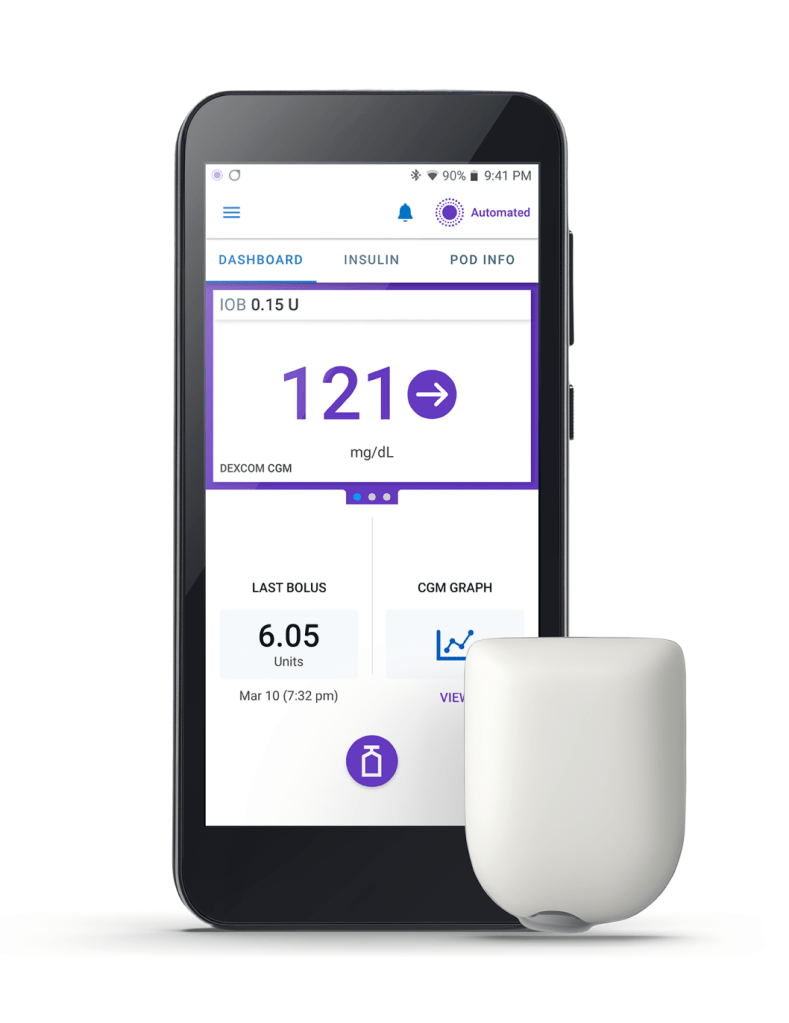
Insulet is one the most rapidly growing medical manufacturers in America. They offer products for tracking and managing diabetes. Their premier product is Omnipod: a smart insulin delivery pump, managed by a dedicated Mobile/Tablet application. In 2020, due to rapid growth and an emphasis on hardware manufacturing, Insulet’s software department was comparatively new and primarily supported by contractors. I served with a team contracted through Innovia CoLabs. I supported Omnipod’s Healthcare Provider Portal and championed a Design System Documentation project that made it easier for future contractors to onboard projects swiftly. The resulting system that I built and delivered for Omnipod is still used today.
Projects and Accomplishments
• Omnipod Healthcare Provider (HCP) Portal
• Benefits Checker Wizard Workflows
• Global Standards and File Documentation Project
• Consultant for Single Source Of Truth (SSOT) Documentation
• Sketch / Abstract file structure reorganization
Omnipod Healthcare Provider (HCP) Portal

UX Design / Information Architecture
• JIRA / Lucidchart / Sketch / Abstract
• Preliminary Information Architecture for new website
• Cross-Language project in both Salesforce and Drupal
• High level Requirements with Project Owner and Senior Engineer
• Led IA Diagramming and designed UX Workflow
Summary
At the time of the HCP Portal project, Omnipod’s Homepage offered a robust experience for users of the product (patients). They could create a user account, register their device, obtain support, pay bills, etc… There was technically an alternate landing page for Healthcare Providers (HCP), but the experience was essentially just a form requesting more information about Omnipod.
The goal of this project was to establish an equally robust portal system for HCI’s. I was brought in at the very beginning of the Requirements Gathering phase. The planning team consisted of a Scrum Master, the Lead Developer, Product Owner, and myself. I took the lead by scheduling sessions to review the established high-level requirements and strategize methods of breaking them down into epics and stories.
Stakeholders, Requirements, and Information Architecture
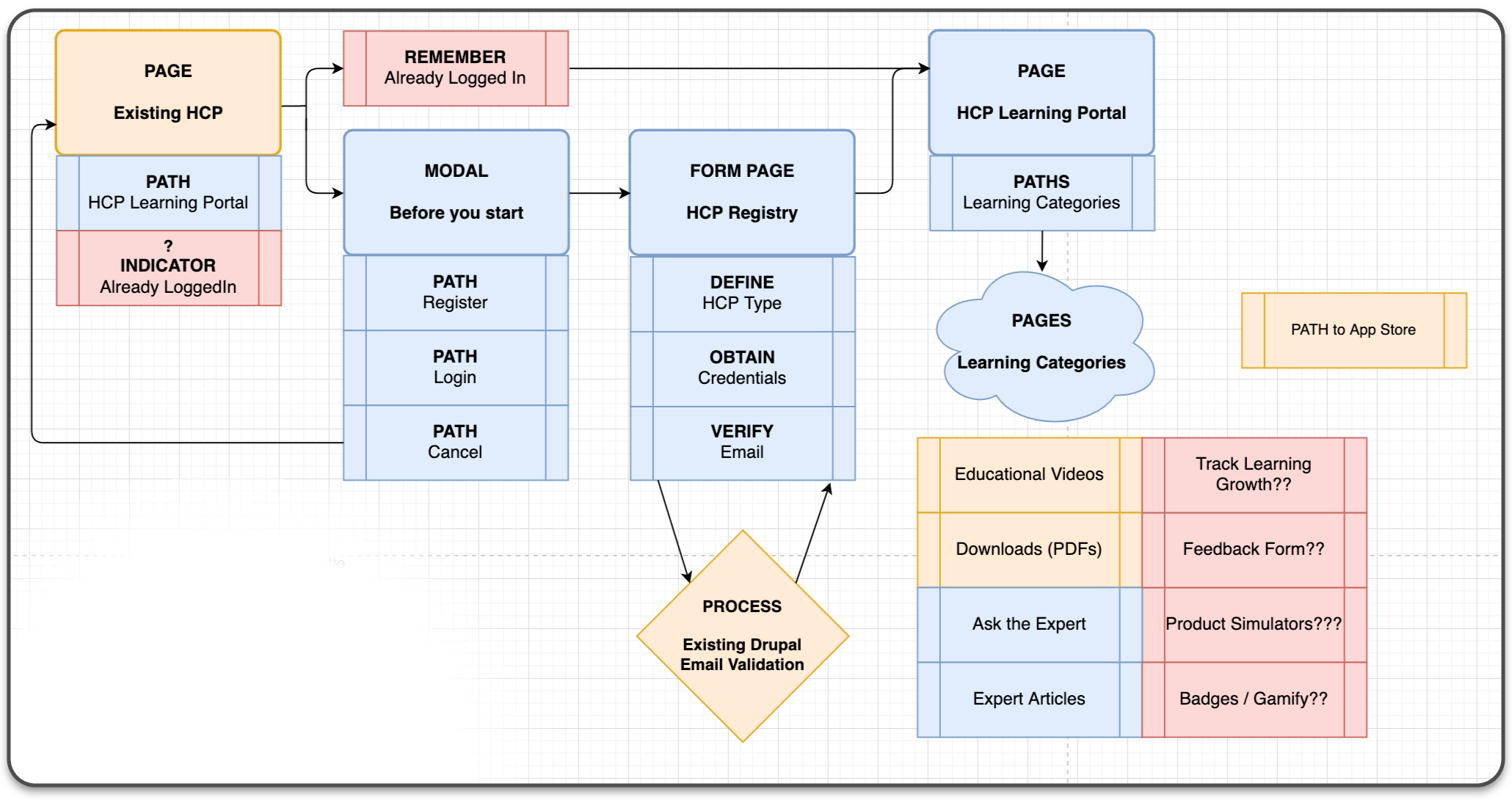
To aid in this process, I was constantly “white boarding” our meetings in Lucidchart and sharing the process via screenshare in Microsoft Teams. While modest in appearance, maintaining this Information Architecture diagram during sessions helped Stakeholders to visualize intended workflow structures, identify any portions of the workflow that might require heavy development effort, and delineate between the essential MVP and future effort. To that end, I established a simple color coding system within the diagram: Orange indicated existing content that was already established and usable. Blue indicated content that would be built during the project lifecycle, requiring more granular agile stories. Red indicated future content that didn’t fit.
Workflow Mapping and Mockups
The finalized Information Architecture diagram also served as a template for plotting Workflow Maps. Starting with the ideal “happy path” workflow, I collaborated with the PO and Lead Dev to ensure that all steps, states, and edge-cases were accounted for.
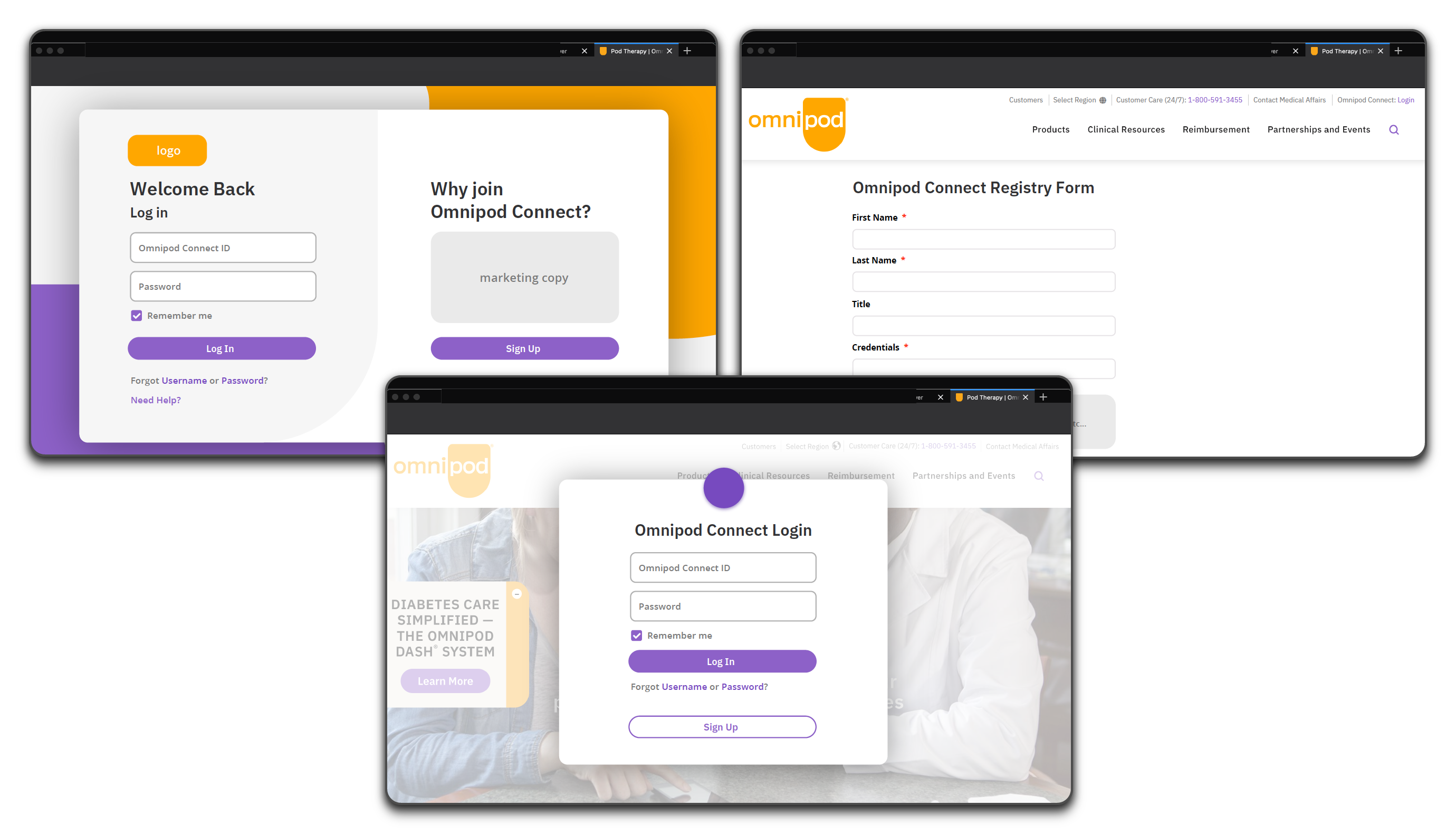
I created a small collection of essential screen mockups to help visualize tricky details related to login roles and credentials. While the goal was to build all hi-fidelity mockups in Figma, I occasionally had to modify screenshots of existing omnipod.com elements because the project’s associated Abstract libraries were in disarray.
Project Pause: Winter 2020
Two months into the HCP Portal project, the company determined that a pause was in order. A few factors contributed to this decision:
It became clear during our preliminary requirement sessions that many of the desired features were not ready to be implemented yet, such as various knowledge services and the ability to remember login IDs between sessions. The lack of educational and medical resources were of particular concern, since the purpose of a dedicated HCP portal was to help users become knowledgable about Omnipod products.
On the back end, the registration and login processes were jointly handled between Salesforce and an older existing Drupal service. It didn’t make sense to build a “one-off” login service for HCP Portal if there was already plans to migrate the remaining Drupal structure to Salesforce, and – most importantly – plans to implement a Single Sign On (SSO) feature.
Conclusion
Pausing a project after two months of intense planning can feel discouraging. But in this case I am extremely pleased with the end result. The process of gathering project requirements and mapping workflow is precisely for this reason. My humble diagrams identified important gaps that had not been considered yet. And my login & registration workflows brought attention to the convoluted Salesforce / Drupal situation.
Ultimately, reshuffling HCP Portal’s roadmap prior to Q1 2021 was an excellent judgement call. The project’s epics and preliminary requirements were in a much better state and could be accurately ranked within the larger company backlog. I’m happy to report that Insulet did eventually reintroduce the HCP Portal to their development roadmap: it is now live and fully functional. OMNIPOD HCP PORTAL
Benefits Checker Wizard

UX Design / Workflows
• JIRA / Sketch / Abstract
• Solved various Workflow Edge-Cases
• Designed Style and Branding options
Summary
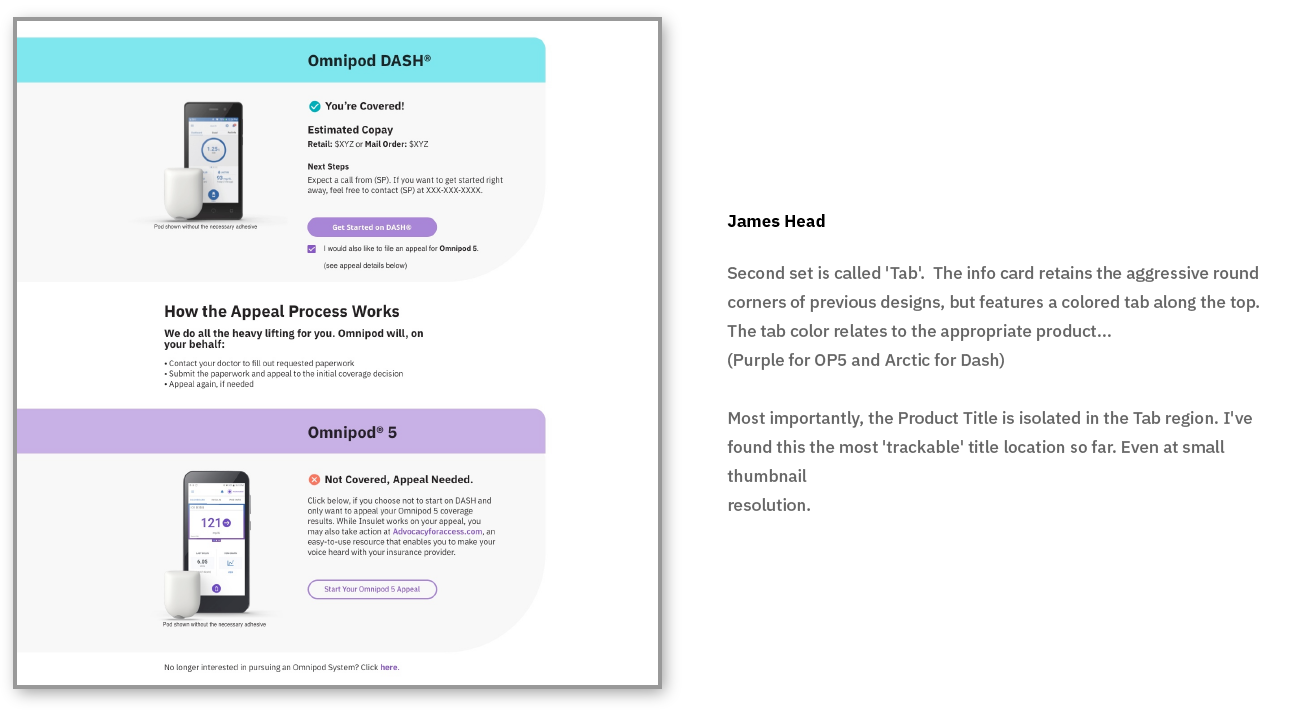
As efforts related to HCP Portal were winding down, I lent my skills to another Omnipod project via Innovia CoLabs. The Benefits Checker (BC) was a complex signup wizard meant to accurately assess new customers’ diabetic needs, as well as their insurance options. The goal was to find the perfect Omnipod model for both the customer and the company: the right Pod at the right price.
Edge-Case Detective
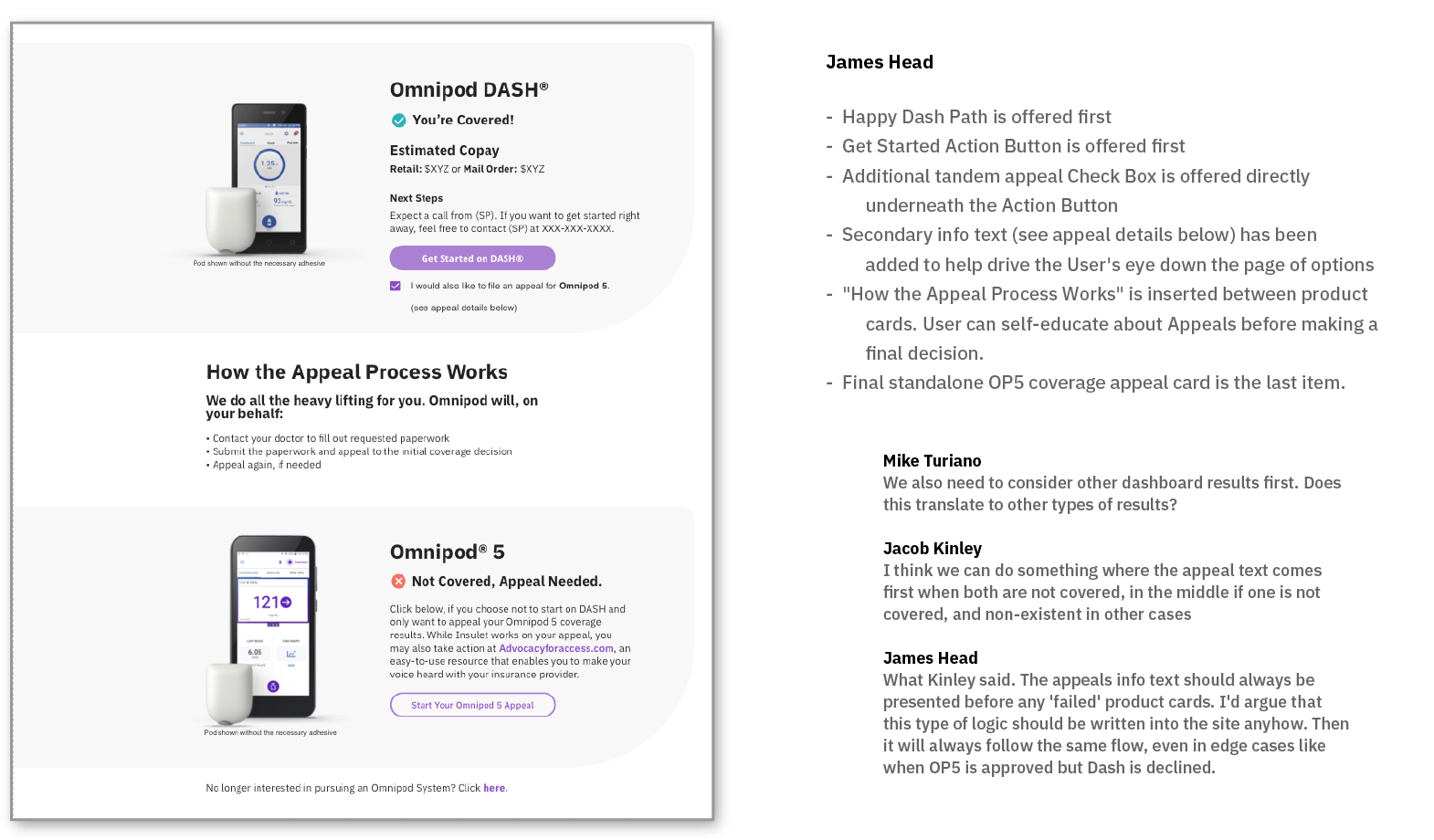
Innovia already had two UX Designers serving diligently on the project during Q4 2020. Their primary efforts were going toward designing robust hi-fidelity “happy path” workflows for Stakeholders to review. The Benefits Checker was meant to drive sales conversions, so every iteration of the standard workflow was being scrutinized by sales and marketing. This cut into the UX Team’s ability to discover and solve edge-cases. I was brought in to address the “not-so-happy paths” and wrangle various workflow solutions, thus helping the project remain on schedule.
Style and Branding Designs
Frequent input from sales and marketing also led to frequent requests for additional design options, which would normally be discouraged as a type of Scope Creep within Agile projects. In this case, it also made sense to explore alternate designs for the purpose of testing various edge-case layouts. Solutions were reviewed between all three of the contributing UX Designers. We critiqued our combined work as a group and selected the most viable options to present to invested Stakeholders.

Global Standards and File Documentation
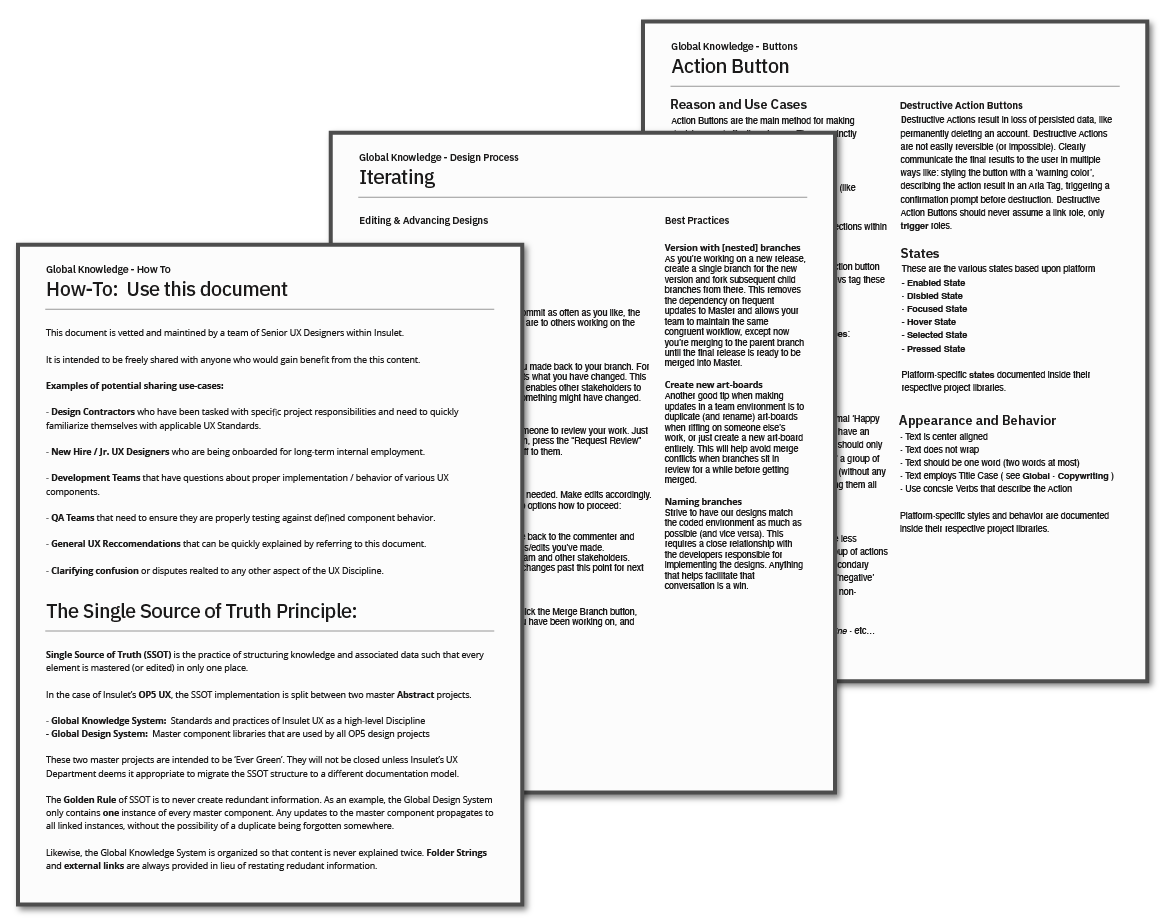
Design System Documentation
• Documentation / Design System / SSOT / Sketch / Abstract
• Global Standards and Style Documentation Project
• Consultant for UX Designers on Single Source Of Truth (SSOT)
Summary
While serving Insulet as designer with Innovia Co Labs, I recognized the need for a codified UX Design System that could serve as a Single Source of Truth. This is not something that their internal design team had considered at the time. I partnered with Innovia and essentially ‘pitched’ this SSoT project to Insulet. The company was receptive to the project offer.
Execution and Longevity
Insulet recognized that having an established Design System would make it easier for various contractors to jump right into their respective projects with very little wasted time and energy. Referencing a Single Source of Truth and related Master Component Files, design contractors could essentially onboard themselves and make confident design choices.

Insulet’s internal design team had unique security concerns that barred me from establishing their document in a live Wiki (such as Confluence). Instead, I found ways to fold the document system into Sketch by building reusable Art Board page templates.
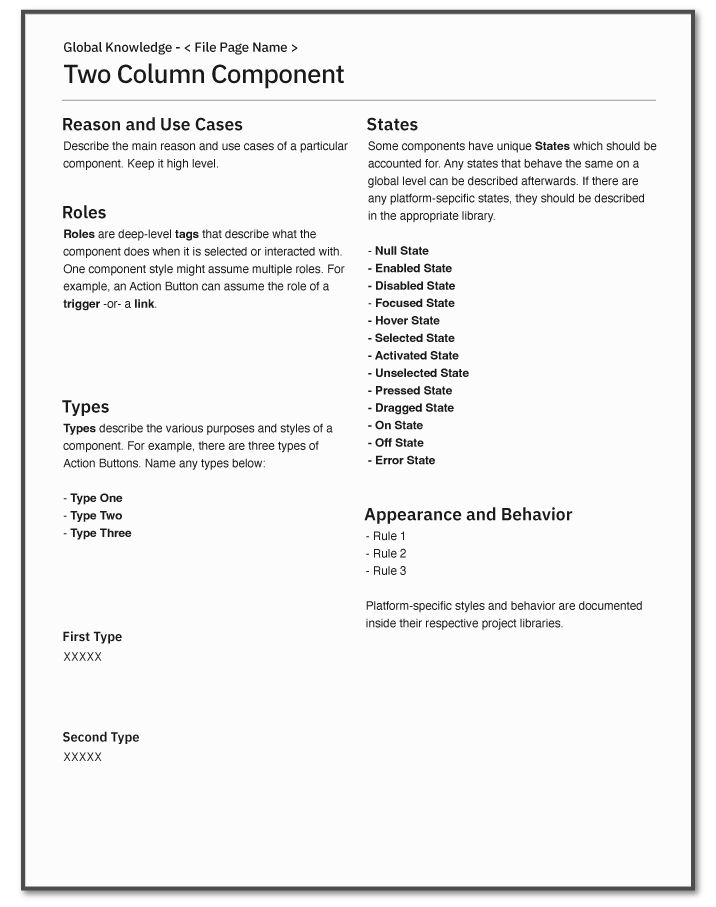
Additionally, related Abstract component libraries were in disarray. Each project had slightly different asset stylings and were not compatible with each other. The only way to resolve the problem was to conduct a product-wide restructuring of all design libraries. Most importantly, the final library structure needed to remain pristine and safe. Thus, I partnered with the Lead Designers of all Omnipod teams over the course of a month; documenting their various needs and preferences in relationship to design project structure. The resulting Master Component File system that I built and delivered for Insulet is still used today.


 HEADWRIGHT